Friday, November 14, 2014

Autumn in the North Country: The Wilderness Experience

“The wilderness experience positions the great questions we face in life within the context of our utter smallness. Only our acceptance, our willingness to go where we are small and where we need to respect the power and objectivity of nature makes it possible for us to experience a hero’s journey.” Ann Bancroft, Arctic and Antarctic explorer and co-author of No Horizon is So Far


The Deep Crevasses on the Cougar Divide leading to Mount Baker.

Table Mountain in the foreground and Mt. Shuksan in clouds behind it.

Glaciers and Crevasses


Rocks along the walk to Cougar Divide


“There is a cleanliness, a breadth and sweep and strength in the north, a purifying realization that one is living close to the fundamental elements of life. Yes, the north has a spell.” Canoeing with the Cree


Tuesday, October 07, 2014

Filson is about doers doing things


Filson is about doers doing things. It’s about quality. It's about durability. It's about classic style. It's about lasting generations. It’s about being Made in the USA. 

This is my new work cape jacket designed by Nigel Cabourn for Filson. Inspired by a vintage 1930s Filson Cruiser that Nigel found while digging around in Japan, the work cape jacket features a corduroy collar for added comfort, snap clip buttons which are easier to maneuver with gloved hands, just in case you're on an Arctic expedition, and the classic plaid-patterned wool from the mills of Pendelton, an American heritage company older than Filson. 

Filson's heritage is the cruiser, the work shirt that timber cruisers wear. When Filson hits the mark with a product, it starts with the cruiser as the inspiration. Cruisers were meant for timber cruising—gauging, observing, recording a forest’s characteristics. I’m not a professional timber cruiser, but a recreational forest cruiser, a writer and storyteller. The writer sees, he walks, travels, taking down notes.He cruises. A cruiser could be cruising a few weeks at a time seeing country few other humans have and then he might pull back a branch and stand face to face with a moose. Not fear but a tranquil calm engulfs the cruiser.

The cruiser, scoping the land is like the fisherman reading the waters. There is no deeper connection to the land or water. That's how I aim to be when I walk with my dogs through the forest. Here Marcos is wearing a Filson dog coat with the classic shelter cloth on the outside and mackinaw wool underneath. This was the first Filson product I purchased."Might as well have the best," which is especially true for a dog like Marcos, a retired therapy dog and hero of my book Pick-Up Dogs: How Two Rescue Dogs Save the West from Being Won

Underneath my work cape jacket, I'm wearing a Filson Jac shirt, which I have coined the "Brown Bear Hug." Brown Bear is one of Marcos's many nicknames and wearing the shirt is comfortable. Like hugging Marcos. All in all, I'm very pleased with my Filson gear and will do stories on other Filson items. Though known for their cruisers, I really love my Filson pants, which unfortunately I'm not wearing in these pictures.  

Filson Work Cape Jacket designed by Nigel Cabourn


"Might As Well Have the Best." C.C. Filson

Thursday, September 11, 2014

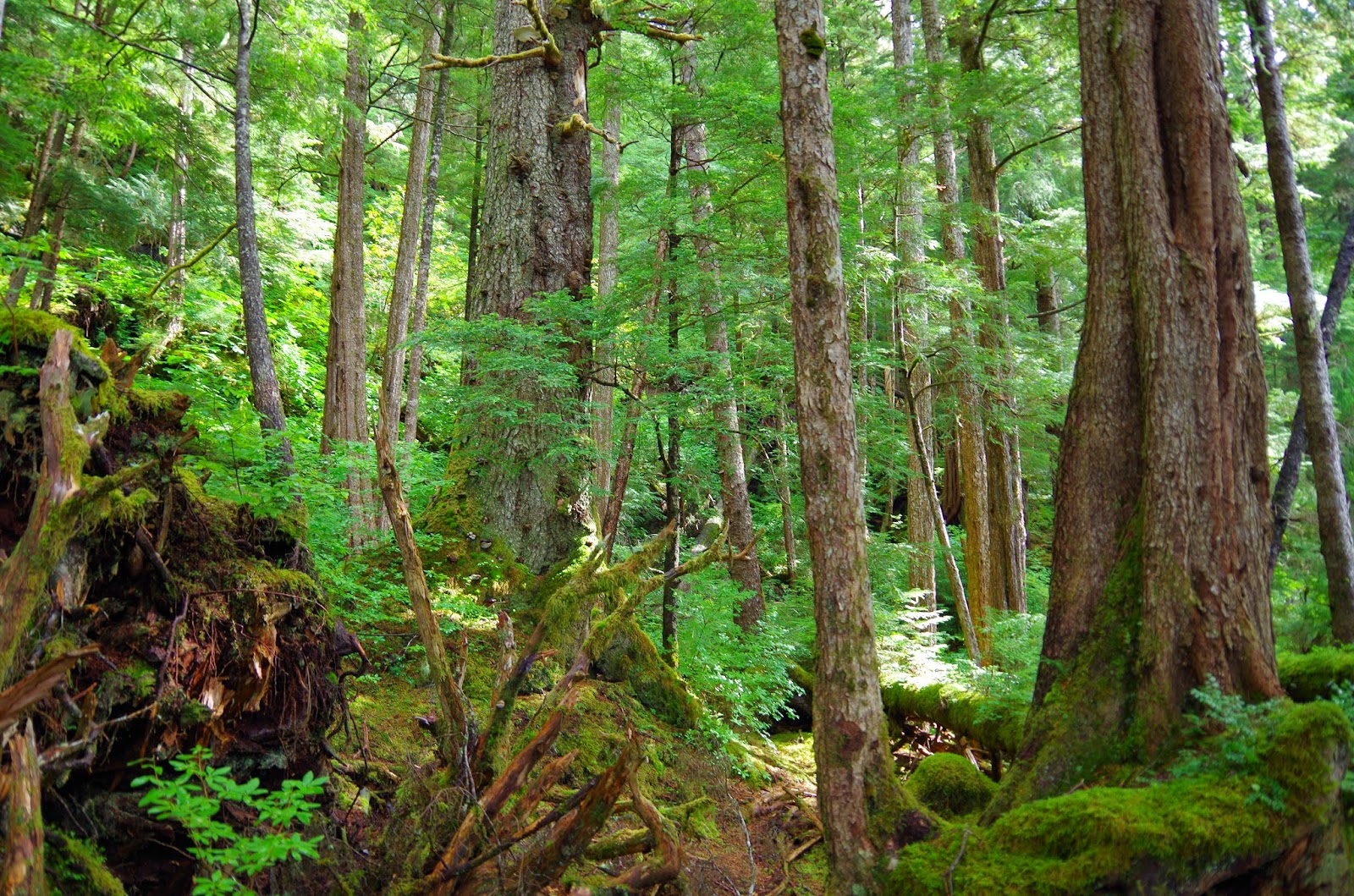
Sitka Spruce Forest in Southeast Alaska


Teeming with life, Indian River running right through the town of Sitka is full of salmon returning to their birthplaces to spawn. 


 Lots more info on ecological implications of the forest, salmon, and Sitka spruce here. 

Monday, September 08, 2014

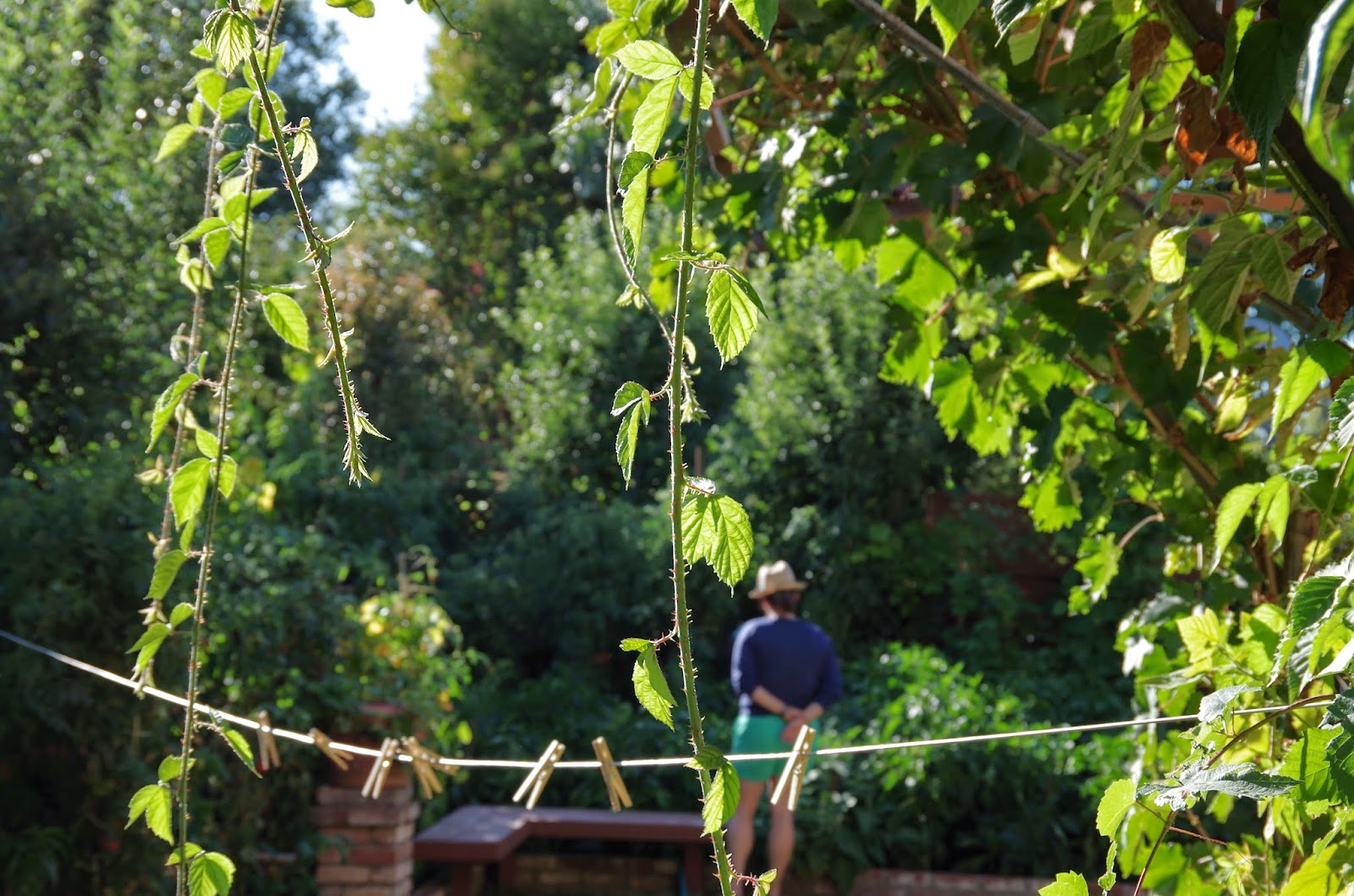
The Maestrini Garden


The mural: perfect image of Father and Son mushroom hunting

Nonu riding his bike

Fernando with his father before leaving Italy


Anthony tending the garden.

Sunday, July 20, 2014

Last Remnants

Location: Gee Point, Finney Peak, Deepest of Deep Skagit

Shaking off

Our Quest to find the last remnants of old growth forest in Whatcom and Skagit counties leads us to stranger and stranger places. The places where it was uneconomical to harvest logs. The places where they would've needed helicopters to log. Up high and trapped in steep canyons. Montaigne forest--mountain hemlocks, spruce and Montaigne Douglas fir.

Gee Point on Finney Peak requires 17 miles of driving on windy forest roads once off another windy road that bends over with one of the most picturesque views of the deep green of the Skagit River. The hike is short in comparison to the drive, but requires bushwhacking before one reaches old growth. 

The high mountain forest on the way to Cow Heaven is attained by hiking up 4000 feet over 5 miles or so. Remote, out of the way, it seems forgotten.

Cow Heaven isn't far from the highway or the Skagit River but requires hiking up 4000 vertical feet over 5 miles or so.


Saturday, May 10, 2014

The Days Between: For the Best Fishermom I Know


There were days in between.

There were days days between the day when I uttered my first word--"Bird"--and the day when she and I found the mouth of the Elwah and saw a great blue heron much larger than the smaller version of myself.

There were days between the day she got me dressed and ready for my first day of kindergarten  and the day she tried to give me some final pointers before I left home for college.

There were days between all those days when I went from being a boy to becoming a man.

She gave all she had to give to me. How much I'll never really know.

There were days in between and those were the ones that mattered. All she did was help me grow, grow, grow.

There were days between the day when she pulled the hook out of the first fish I ever caught and the day when I caught my first lunker.

There were days in between the day when she put a band-aid on my first scrape and the day when she pulled a hook embedded in my neck by the wind and my poor casting skills.

There were days in between the day when she caught her first steelhead and the day when we first cast our lines together in the waters of Alaska.

There were days in between when she taught me all about fishing, which is essentially life, an eternal quest in nature for something greater than  ourselves, for finding illumination in God's light, for a search for answers in deep, dark holes and the joy of coming out enlightened or just the joy in the search. She was there during the days in between all of those answers, which were just more questions. But her example was what guided me.

She was there during all the days in between. And that's what mattered.

There were days in between the day when she brought me into this world and the day I realized that she is the best fishermom I know.

There were days in between when all she did was help me grow, grow grow. I took my first steps thanks to her. My fishermom watched over me while I learned the music and the lyrics to the song. I've seen many worlds since then. I've seen many worlds since when I first left home. But I always love coming home to my fishermom.


Sunday, May 04, 2014

Growing up with the Dead

Since my wonderful first experience with Brahms
at age four, I've found music to be, among many other things,
a safety net, a lifeline that remains constant 
when all other mental constructs 
are in total Heraclitean flux.
Phil Lesh, bassist, Grateful Dead

This is who I am.

Every thing makes sense now. After reading Phil Lesh's biography Searching for the Sound I felt like I was hanging out with a version of my childhood buddies and myself, just from a time 30 years before my childhood.

Like Lesh, I was raised on classical music and then I became entranced with Jazz and then rock n' roll. Kind of the backwards route for most people.

I love how Lesh describes his first encounter with music and his earliest memory. Brahms. First Symphony. Age 4. I, too, remember when I first "discovered" music. KKHI, the Bay Area's great classical music station in the seventies and eighties, had this Sunday afternoon opera show. My parents had KKHI on 24/7 growing up and I remember this opera show's opening tune blended perfectly with the idyllic backyard patio I grew up knowing in Menlo Park.

Menlo Park, my hometown, is really the birthplace of the Dead, though usually it's Palo Alto that takes the credit because it has a strong claim, too.

Jerry and Phil, cornerstones of the Dead, met up in Menlo Park, at the Chateau, Ken Kesey's house, somewhere near my local drinking hole the Dutch Goose. The Dead's first gig, at Magoo's Pizza, 635 Santa Cruz Avenue, which is now a fancy French restaurant, is where the band discovered the wonderful power of improvisational music. Early folk gigs and meet-ups among the band and Jerry's other folkie friends took place at Kepler's, which is still in Menlo Park but moved across the street, and was a place where you could drink coffee and read books, quite a novelty at the time.

So glad that there was another band called the Warlocks, so the Dead could come up with a much better name. The centuries old Grateful Dead myth is the essence of the band, their community, and is a good rule to live by.
Pigpen learned to sing the blues in blues clubs in East Palo Alto, when I grew up the "other side of the tracks," and now the home of Facebook. Jerry taught guitar at a music shop that might have been where I first took sax lessons, where he met Bobby Weir, who was attending M-A, my old high school, and the idea for the Dead began its embryonic stage. Of course, Weir never graduated. The dyslexic was expelled from every school he ever attended. Quite a prankster!

After their beginnings in Menlo Park and Palo Alto, the Dead became the greatest touring improvisatory band in the history of music blending so many influences (folk, blues, country, jazz, rock, avant garde classical) into one collective and totally unique American experience. They really are an American Beauty.

Dead, circa 1965.

The Dead were 5 non-prodigies. I only trust musicians who are ugly and the Dead were five of the ugliest (in physical appearance) that ever existed. Just think. Pigpen. Organically greasy. I love Lesh's side note on how he never saw Pigpen without his leather vest which was glued onto him. Jerry was the only member of the Dead who exhibited any extraordinary talent, but even his talent was of the kind that is purely from working hard, literally practicing every waking hour of the day his banjo, guitar and pedal steel. Nobody practiced as hard as Garcia in the 60s and 70s.

Pigpen, one of the ugliest dudes ever. Which is why I trust him as a musician.
What made the Dead great is that they all learned how to play together. They didn't develop individual talents and then form. When they formed, they had no real individual talents (except for Jerry). Phil was a classically trained trumpet player who learned to play bass on the fly. As Lesh notes, "For more than 2 months we played together every day and I can't exaggerate the importance of this experience. The unique organicity of our music reflects the fact that each of us consciously personalized his playing to fit with what others were playing and to fit with who each man was an an individual, allowing us to meld our consciousnesses together in the unity of a group mind." The Dead took the concept of "bleshing"--mesh + blend--from Theodore Sturgeon's sci-fi novel More Than Human bringing their freakish X-men like idiosyncratic powers to make music in a completely group think mind-melding experience.

Music, for me, is all about contrast and compliment. Tension and release. These are the 2 big laws of music. And those are the rules that guide the Dead. Build tension, epic tension, and then find beauty in the release. Contrast--Jerry's guitar and Phil's bass were like a Bach counterpoint, contrasting but fitting together in a sort of puzzle, with Weir complimenting and filling the in between sounds.

The show that most impressed Lesh was seeing John Coltrane in a small San Francisco club. Oh how I wish I could take a time capsule to go see Trane, particularly in '59 with Miles, or the Classic Coltrane Quartet in the glory years '64-'65. I'd also of course love to take a time capsule to see the Dead in their most classic shows (2-14-68, 2-13-70, 5-2-70, 8-27-72, 9-21-72, 12-19-73). Oh my! That's all I'd do with a time capsule. That and maybe talk to Lincoln.

Lesh talks about how Coltrane's version of Rodgers and Hammerstein's "My Favorite Things" was one of the blueprints for the Dead. Listening to Coltrane's version of "My Favorite Things" was a moment when music changed for me, too. It really is the quintessential essence of Jazz. Taking a standard and making it completely unique is what Jazz is and what the Dead did so well.


Jerry in the early days playing pedal steel guitar with David Nelson and the New Riders of the Purple Sage


Reading the book was like being in a conversation with my childhood buddies. Lesh has been a musician I've worshiped my entire life. Not worship in an untouchable Jimi Hendrix or Mozart kind of way. Those guys were superhuman meteors and not really of this earth. But worship in the sense that "If I could play bass, this is how I'd play" kind of way. Lesh seems approachable. I try to play my bari sax with a lot of the same influences that Lesh had (from Stravinsky to Coltrane).

Note the Red, White and Blue wristbands. That's my workout gear, too.

The Dead led me to discover Johnny Cash long before he became re-popularized with the movie and the recordings he did in his twilight years with Rick Rubin. Also Chuck Berry--not many kids my age were listening to Chuck Berry, who just about smokes any of the music being made nowadays. Lesh also brings influences from the world of classical like Charles Ives or Brahms. Which brings up 3 wonderful anecdotes Lesh tells about Jerry:

1) Lesh was invited to be a guest conductor for the Berkeley Community Orchestra conducting Stravinsky's Rite of Spring as a benefit. It was in the later years when the band had grown apart and wasn't spending as much time together when they weren't on the road. Lesh didn't tell anybody in the band, thinking none of the guys would show up anyways. But who does he see in the front row when he goes to conduct but his best buddy Jerry. Surprise! It took Lesh aback when Jerry later brought some paintings of him conducting.

2) Lesh tells another story of how he rented a box at the San Francisco Opera for Wagner's Ring Cycle, some 24 hours of German opera. He invited the band. The only member to come for more than 2 nights was Jerry, who came all nights except for the last one, because he had promised to take his teenage daughter to see the Phil Collins concert. It's a pretty funny mental image to imagine Jerry at either a Wagner opera or a Phil Collins concert and it makes me howl out loud laughing to think about.

3) SCUBA diving--Apparently Jerry found peace from all the pressures of being a cultural icon by going SCUBA diving. Phil was always afraid of activities like that but Jerry insisted he come with him. And Phil describes just how happy it made Jerry to be under water. One more anecdote just to close it up: Jerry loved water and Phil describes coming to his house and watching Jerry just swim with his giant New Foundlands in his pool. Lesh describes the immense closet in Jerry's house that is empty except for 8 black t-shirts, the only attire Jerry ever wore.

If anything, Lesh's memoir of playing with the Dead, the greatest touring band of all time, is a story of friendships. Especially, his friendship with Jerry. Although there are some really great anecdotes about Bob Weir and Mickey Hart. That's what it's all about. Traveling with your buddies. Having adventures. Living a dream. Being kind to people in between and making people happy. I have tremendous gratitude for the great work Lesh and his buddies did for the thousands of people they made happy.
Always good to see a happy Jerry (and a wild Weir).


Friday, April 25, 2014

Canonical Business Books: Dale Carnegie's How to Win Friends and Influence People

Like other books I've reviewed in my canonical business books series, Dale Carnegie's absolutely classic How to Win Friends and Influence People is not just a business book or a Success Literature book or a self-help book but a book that can help us make it through this crazy thing we call life. It serves as a lesson on how to be happy and teaches us probably the hardest skill to learn or master: how to deal with people.

I use the phrase "deal with" because a lot of times that's what making it through life is: dealing with people, managing them, making due with them, putting up with them, sharing a world with them. It's not easy.

When I was working on my PhD, my Colombian roommate and I had a saying: "Coño, no es fácil," which loosely translates to "Damn, it's not easy." The schoolwork associated with the PhD wasn't that easy, but what was really difficult was dealing with the people. Granted, academics are notoriously arrogant, self-serving, quick to criticize and condemn, and in general are some of the most difficult people one earth to deal with, but even in my life post-academia, there are still not just difficult people to deal with but more poignantly, there are difficult situations in which we have to deal with people.

A survey done at the time of Carnegie's writing (book was first published in 1936) revealed that the prime interest of adults is health. Their second greatest interest was in developing skills in human relationships.Carnegie wasn't just a great public speaker. His main job was to help people conquer their fears and develop courage.

Carnegie's book revolves around a concept that Stephen Covey later borrowed and expanded upon in his canonical book 7 Habits of Highly Effective People (see my review here). The principle: Seek first to understand... then to be understood. This habit is about Empathic listening: rephrase content and reflect the feeling. This emphatic listening is also worth keeping in mind for public speaking. The basic principles of public speaking, which is essentially storytelling, are ethos-pathos-logos. Ethos is gaining credibility with the audience through integrity. Pathos is feeling the thrust of what is going on with the audience. Logos is the logic and analysis. Too often we start with logos. We need to first gain credibility by understanding our audience, then feel what they say, and then and only then seek to be understood. Don't bother speaking until you can rephrase your interlocutor's argument in your own words.

The quote that got me to read Carnegie's book is one from Benjamin Franklin who said: "A man convinced against his will is of the same opinion still." Read that quote again. And think about it. In an age of so called Big Data, it's important to remember that data, facts and logic are not the key to the mind. In other words, you can't use facts to change a belief. The keys to the mind are metaphors, which connect the unfamiliar to the familiar. The symbolism in metaphors makes us connect at a deeper level. Understanding what is familiar and then presenting it in new ways is one of the most powerful ways to unlock the door to somebody's mind so that they can understand your point of view. Opinion pieces that try too hard to drive home a point will be derided for what they are: one-sided sledgehammers.

Classic!


Let's start with Carnegie's suggested 6 ways to make people like you:

1) Become genuinely interested in other people.
2) Smile.
3) Remember that a person's name is to that person the sweetest and most important sound in any language.
4) Be a good listener. Encourage others to talk about themselves.
5) Talk in terms of other person's interests.
6) Make the other person feel important--and do it sincerely.

Here's another key topic:

How to keep a disagreement from escalating to an argument.
1) Welcome the disagreement. Remember: "When two partners always agree, one of them is not necessary." Disagreement is the opportunity to be corrected before a serious mistake.
2) Distrust your instinctive impression (to be defensive).
3) Control your temper. You can measure the size of a person by what makes him or her angry.
4) Listen first. Remember: Seek first to understand...then to be understood.
5) Look for areas of agreement.
6) Be honest. Admit errors.
7 Thank your opponents for their interest. Those who disagree with you also must have an interest in what you're arguing about.
8) Postpone action to give both sides time to think through the problem.

Win people to your way of thinking:
1) The only way to get the best of an argument is to avoid it.
2) Show respect for the other person's opinions. Never say, "You're wrong."
3) If you are wrong, admit it quickly and emphatically.
4) Begin in a friendly way.
5) Get the other person saying "yes, yes" immediately.
6) Let the other person do a great deal of the talking.
7) Let the other person feel that the idea is his or hers.
8) Try honestly to see things from the other person's point of view.
9) Be sympathetic with the other person's ideas and desires.
10) Appeal to the nobler motives.
11) Dramatize your ideas.
12) Throw down a challenge.

Be a Leader: A leader's job includes changing your people's attitudes and behavior. Here's how to do that:
1) Begin with praise and honest appreciation.
2) Call attention to people's mistakes indirectly.
3) Talk about your own mistakes before criticizing the other person.
4) Ask questions instead of giving direct orders.
5) Let the other person save face.
6) Praise the slightest improvement and praise every improvement. Be "hearty in your approbation and lavish in your praise."
7) Give the other person a fine reputation to live up to.
8) Use encouragement. Make the fault seem easy to correct.
9) Make the other person happy about doing the thing you suggest.

Keys to Life!


Thursday, April 17, 2014

#TBT to 1996: Steelhead on the Sol Duc

17-pound steelhead on the Sol Duc River
If memory serves, this was back in March of 1996. I had traveled from Walla Walla to Seattle to meet my parents who were coming from the San Francisco Bay Area. Together we went in a rental car to the Olympic Peninsula, what was for us a wild and woolly part of the country patched with clear cuts and old growth forests, big rivers green with glacial till layered with large rocks and stones and moss draping off trees.

We were with a guide we had met while fishing in Alaska and had fished for 2 days completely skunked. Though he was a great guide who knew the rivers well and tied creative flies for a range of conditions, steelhead fishing is like that. Cold, wet and a very low strike per cast ratio.

Late in the afternoon on the last day of our float down the Sol Duc River I casted near a big rock and a powerful undercurrent not far from a bridge that Highway 101 goes over. The same 101 that speeds through the Silicon Valley of the Bay Area where I am from. This other version of 101, going over the Sol Duc, not far from the Forks of Twilight fame and western red cedars as thick as suburban houses was a lot different. Logging trucks rumbled by.

I felt a large tug. Oh the jolt of adrenaline! The reel on my rod was spinning so fast I thought I saw smoke come off it. I held on for dear life. Our guide edged his MacKenzie River boat to shore. I stepped out of the boat and worked the fish which had jumped several times doing cartwheels but wasn't the most acrobatic fish I've ever caught. After a while he slowed down and we netted him by the side of the river. It was probably the biggest smile we'd seen from our guide and probably the first he'd shown in a long time. You can see him beaming in the picture.

A 17-pound buck. The moment cemented in history was a turning point. A few years later, my parents retired and moved out to Port Angeles, where they have lived for almost 15 years. I'm not too far away in Bellingham, which is less than 100 miles away by how the crow flies but is easily 4 hours by car. It takes so long because of the crazy topography and the necessity of getting a ferry to the Peninsula. It's a strange and beautiful part of the world. Rugged, green and wet. The fish was almost a moment that retired me from fishing. How can you beat a 17-pound steelhead on a fly rod?